
15 September 2026
Lion Dance vs Dragon Dance: What Is the Difference?
Lion dance and dragon dance are both Chinese blessing performances, with key differences in performers, meaning, and events. A clear guide from a KL dragon and lion dance team.
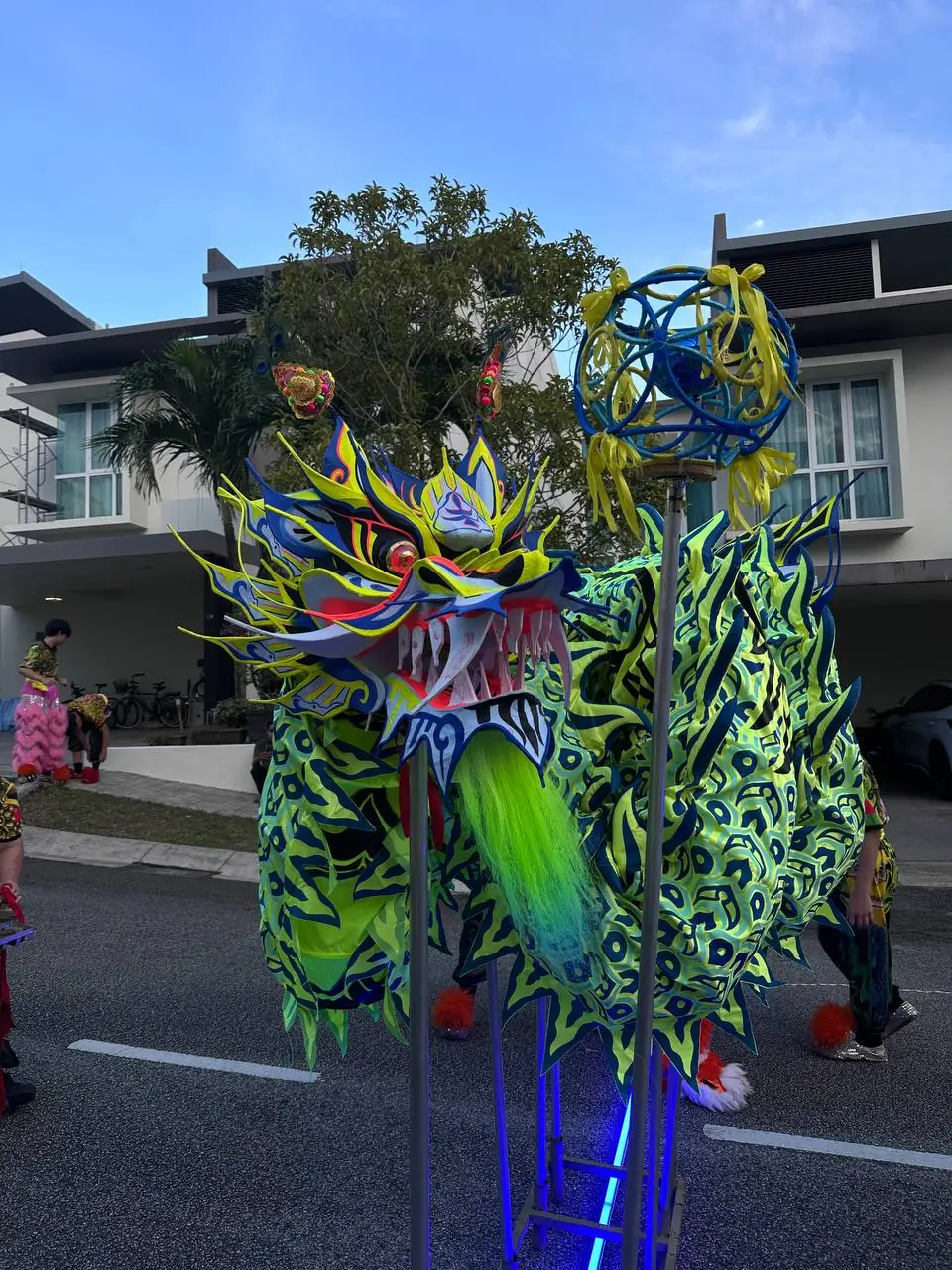
Lion dance and dragon dance are both traditional Chinese performances that bring luck and drive away misfortune, and they differ in size, performers, and style. A lion is performed by two dancers, one at the head and one at the tail, and moves with expressive, animal-like actions. A dragon is a long figure carried on poles by a larger team, usually nine or more performers, and moves in flowing waves and spirals.
TianDi Dragon & Lion Dance Team in Kuala Lumpur performs both.
Quick comparison
- Performers: Lion dance uses 2 per lion. Dragon dance usually uses 9 or more per dragon.
- Movement: The lion is expressive, playful, and acrobatic. The dragon flows in waves, spirals, and chases.
- Symbolism: The lion stands for courage, protection, and luck. The dragon stands for power, wisdom, and prosperity.
- Key ritual: The lion performs 采青, plucking the greens. The dragon chases the pearl.
- Space needed: Moderate for a lion, large for a dragon.
- Best for: Lions suit shops, homes, weddings, and openings. Dragons suit big stages, festivals, and large openings.
What is lion dance?
Lion dance (舞狮) is performed by two dancers inside a lion costume. The head performer controls the eyes, ears, and mouth to show emotion, while the tail performer follows every step. With the drum, cymbals, and gong leading, the lion wakes, explores, plays, and blesses the space. The highlight is 采青, where the lion takes the greens and a red packet and scatters the greens for good fortune.
Malaysian teams mostly perform the southern lion (南狮), which has a large expressive head and a single horn. Styles include traditional ground routines and high pole lion dance.
What is dragon dance?
Dragon dance (舞龙) uses a long dragon made of connected sections, each held up on a pole. The team moves in sync to make the dragon swim, coil, and leap. A performer often leads the dragon with a pearl, which the dragon chases throughout the routine. In Chinese culture, the dragon represents power, wisdom, and good fortune, and it is linked with water and rain.
Because of its length, dragon dance needs a large, open space and a bigger team.
Which one should I book for my event?
- Choose lion dance for grand openings, weddings, home blessings, birthdays, and most indoor venues. It is flexible, interactive, and suits smaller spaces.
- Choose dragon dance for large festivals, stadiums, big stage shows, and outdoor celebrations where the dragon has room to move.
- Choose both for major events such as big Chinese New Year celebrations or large corporate launches. The combination makes a powerful show.
Frequently asked questions
Is lion dance the same as dragon dance?
They are two different traditions. Both are Chinese blessing performances, and the lion uses two performers while the dragon uses a larger team on poles.
Which is more common in Malaysia?
Lion dance is more common at everyday events such as openings, weddings, and Chinese New Year visits. Dragon dance usually appears at larger festivals and stage events.
Can one team perform both lion and dragon dance?
Yes. Many teams, including TianDi Dragon & Lion Dance Team, train in both.
How much space does a dragon dance need?
It depends on the dragon's length and the routine. A large, clear floor area is needed. Share your venue details and we will advise.
Book a lion or dragon dance
Unsure which fits your event? Tell us about it and we will recommend the right performance.